





The Future of Work: Top Skills Outsourcing Professionals Will Need in 2026

Author:
The world of work is undergoing a revolution comparable in scale to the Industrial Era. Artificial intelligence, automation, remote work, and flexible teams are transforming not only how we work, but also what skills are valued. Nowhere is this transformation happening faster than in outsourcing — an industry built on flexibility, efficiency, and innovation.
Why Outsourcing Adapts First
Outsourcing is an industry where adaptability determines success. Companies operating in this model interact daily with businesses from different industries and countries, which means they are the first to feel economic shifts, technological breakthroughs, and evolving client expectations. While traditional corporations can afford to move slowly, outsourcing companies live in a constant state of change.
Outsourcing providers operate at the intersection of three dimensions — technology, client service, and international communication. This unique position makes them highly dynamic: they integrate new tools faster than in-house teams and immediately apply solutions that improve efficiency and quality.
In addition, competition in outsourcing is extremely intense. Clients can easily switch providers if another offers faster, cheaper, or more technologically advanced solutions. This forces outsourcing companies to continuously optimize processes, invest in staff training, and implement innovations to remain competitive.
Today, outsourcing has become a laboratory for the modern labor market, testing new models — from hybrid and distributed teams to AI-powered automation and advanced analytics. It’s where innovation moves from theory to practice.
By 2026, outsourcing will no longer be seen merely as a cost-saving tool. It will evolve into a true ecosystem of digital partnerships, where the key advantage lies in professionals with diverse and hybrid competencies — combining technical expertise, analytical thinking, and strong interpersonal skills. These employees are no longer just performers; they are process architects, capable of reshaping entire business models.
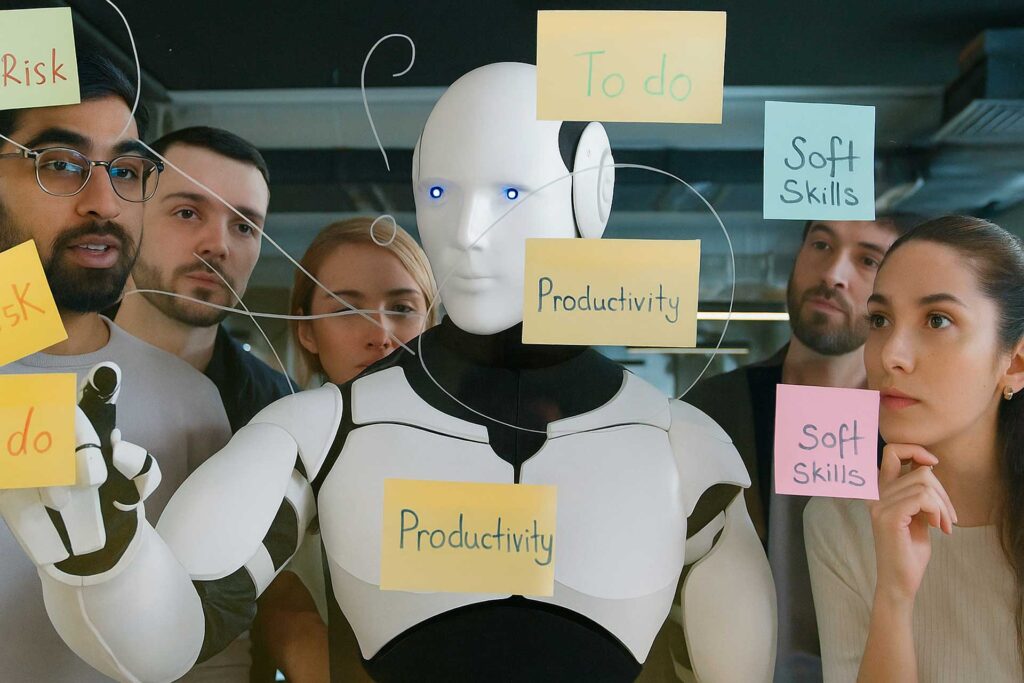
The New Realities of the Labor Market
The global economy is becoming increasingly digital and interconnected — and that means the rules of employment are changing. Below are the main shifts shaping the labor market and the professionals within it.
- The Growing Role of AI and Automation.
Routine processes such as accounting, recruiting, and document management are becoming automated. This doesn’t replace humans — it changes their focus. Employees are shifting from “task executors” to analysts and coordinators of digital systems. - Global Competition for Talent.
Remote work has erased borders: a specialist from Ukraine now competes with peers from Portugal or India. Success requires not only English proficiency but also cross-cultural communication and emotional intelligence. - Clients Expect More Than Task Execution.
Outsourcing is evolving into a strategic partnership model. Clients want partners who understand their business goals, contribute ideas, and drive innovation rather than simply deliver reports. - Hybrid and Project-Based Teams Are the New Standard.
More and more outsourcing companies operate through temporary, cross-functional teams that unite experts from multiple countries for specific goals. This demands self-organization, accountability, and adaptability.

Skills That Will Be in Demand in 2026
To stay relevant, professionals must develop a blend of digital, analytical, and human-centered skills.
In 2026, the market will reward those who can navigate hybrid environments and leverage technology effectively.
🧠 1. Digital Literacy and AI Proficiency.
Understanding automation tools, CRMs, chatbots, and analytics platforms will be essential. The ability to use AI tools such as ChatGPT, Copilot, and Notion AI for optimization will become standard for administrative and office roles.
🌍 2. Cross-Cultural Communication.
Global teams require sensitivity, empathy, and cultural awareness. Those who can build trust and communicate effectively across borders will be indispensable.
🤝 3. Client Orientation and Partnership Thinking.
Modern clients expect insight, not just execution. The ability to listen, suggest improvements, and contribute to business growth transforms a service provider into a true partner.
🔍 4. Analytical Thinking.
Data is the new language of business. Professionals who can interpret trends using BI systems, Excel, or Power BI — and turn numbers into strategy — will have a major advantage.
⚙️ 5. Adaptability and Continuous Learning.
Technology evolves faster than curricula. Lifelong learning and the willingness to retrain will become core professional habits.
💬 6. Soft Skills: Communication, Leadership, Critical Thinking.
Automation amplifies the value of human skills. Teams with strong emotional intelligence and empathy achieve higher engagement and better results.

How Companies Can Prepare for Change
Businesses must not only hire skilled professionals but also help them grow alongside technological change. Outsourcing firms should invest in long-term strategies that combine training, innovation, and human development.
To stay competitive in 2026, they should:
- Invest in employee training — digital tools, languages, and project management.
- Build corporate academies and internal learning programs.
- Implement AI tools and analytics to support employees, not replace them.
- Foster a culture of innovation, where every team member can contribute ideas and be heard.
The future of outsourcing lies in the synergy between people and technology. AI and automation handle repetitive tasks, while specialists focus on creativity, analysis, and strategy. By 2026, an employee’s value will no longer be measured solely by technical skills — but by their ability to think, adapt, and collaborate in a digital world.